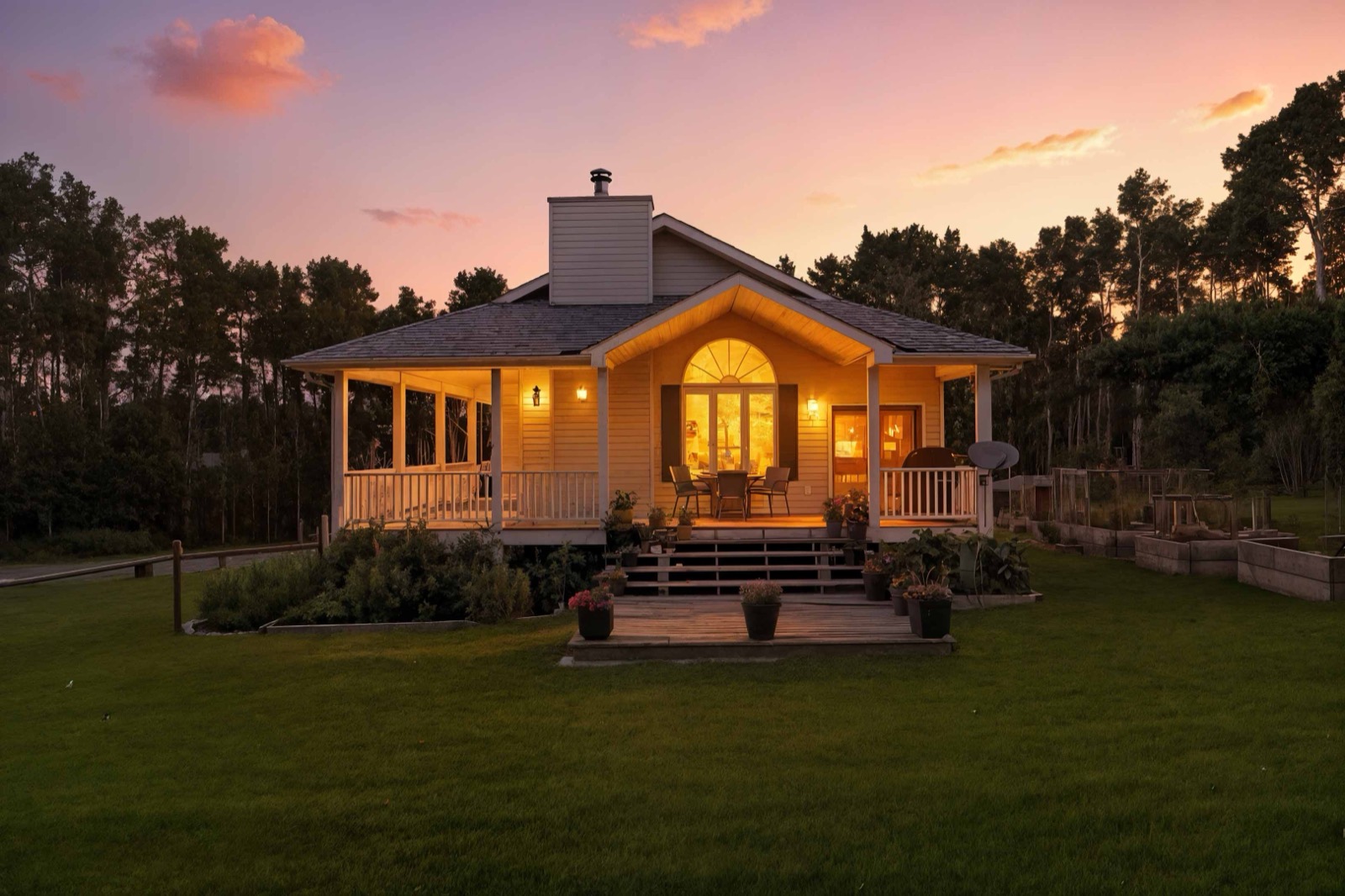
There is a narrow window each evening — maybe twenty minutes after the sun drops below the horizon — when the sky still holds colour and the house lights read warm against it. Photographers call it the blue hour. For a lot of listings, it is often the single most persuasive frame we shoot.
The reason is contrast, but not the technical kind. A daytime exterior competes with a bright sky; the eye flattens the whole scene into "a house." At dusk, the windows glow from within, the home separates from its surroundings, and the property stops looking like a listing and starts looking like a home someone is inside right now.
We schedule around the sun, not the diary.
Why we plan the shoot backwards
A twilight frame cannot be rushed. We scout the aspect earlier in the day, set the composition while there is still light, then wait. Interior lights go on in sequence, blinds are set, and we bracket exposures through the fade so the final grade holds detail in both the sky and the glowing rooms.
It is more work for one photograph. But that photograph is the one that stops the scroll, leads the portal listing, and sets the tone for everything else in the set. For the right property, twilight is not a nice-to-have — it is the hero.
Elevate Media — Notes from the field
← Back to the Journal